

Smarter Campaigns: Data-Driven & Programmatic DOOH at Petrol Pumps and Remote Sites
Introduction
Digital out-of-home (DOOH) is one of the fastest-growing advertising channels worldwide. While many people picture giant city billboards, some of the most exciting innovation is happening at the edge: petrol pump advertising and mining advertising. Both environments offer a “captive audience”—drivers refuelling, or workers on site—but they also present challenges around targeting and delivery.
Programmatic platforms and real-time data have changed the game, allowing brands to optimise campaigns for context, timing, and performance, even in remote areas. Here’s how to harness these tools to make your digital advertising network more intelligent.
Why Context Matters in DOOH
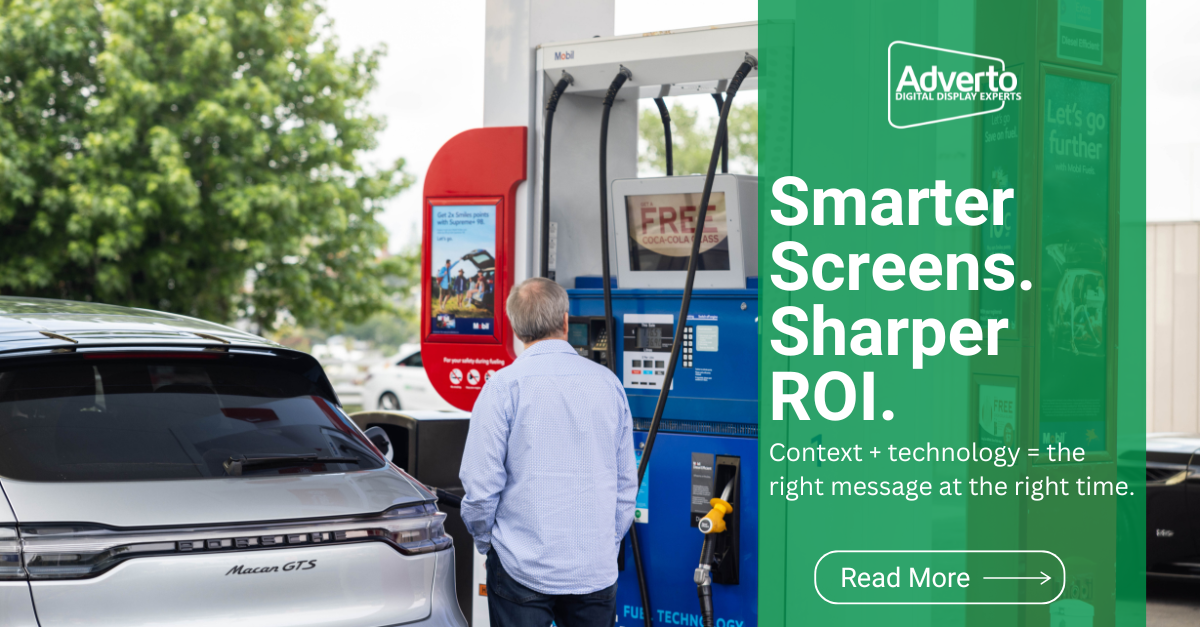
Audiences at fuel stations or mine sites are very different from shoppers on a city street. They are focused, stationary for a few minutes, and often receptive to useful or entertaining content. This context is an asset:
- At petrol stations, people are thinking about their next stop: coffee, snacks, groceries, car wash.
- On mining or construction sites, safety messages, job notices, or morale-boosting content resonate alongside brand advertising.
Petrol pump advertising and mining advertising campaigns work best when they reflect what the viewer needs at that moment.
From Static Loops to Smart Scheduling
Traditional DOOH relies on fixed playlists. Programmatic systems instead serve content dynamically, based on conditions like:
- Time of day or day of week – promote breakfast deals during morning refuels, or hydration reminders during afternoon heat.
- Weather data – hot day? Push iced coffee or sunscreen at the pump. Dusty site? Run equipment-care tips or mask promotions.
- Event triggers – mining town sports finals, public holidays, fuel price cycles.
These data points let operators schedule creative automatically, optimising relevance and spend.
Leveraging Local Data Sources
In urban areas, DOOH planners have endless datasets. Remote environments require different thinking, but still offer rich insights:
- Fuel pump analytics – usage volumes, dwell time, payment types.
- Site telemetry – shift schedules, machinery movement, environmental sensors (temperature, wind, air quality).
- Geospatial info – nearby roads, camp layouts, or distances between refuelling points.
Integrating these feeds with digital advertising platforms ensures that campaigns align with on-site realities.
Programmatic Buying for Rural and Industrial Venues
Programmatic trading—buying inventory automatically via demand-side platforms is becoming standard in metropolitan DOOH. Extending it to petrol pumps and mines opens new revenue streams:
- Smaller advertisers can buy impressions around specific locations or times, without committing to whole-network deals.
- Brands can A/B test creative on remote screens, then expand successful messages nationally.
- Operators gain better yield, selling unsold airtime to new buyers.
Because inventory in isolated places is limited, programmatic also reduces waste, matching supply precisely to demand.
Engaging Audiences Beyond the Screen
The best campaigns link screens to mobile devices or loyalty systems:
- QR codes or NFC tags on petrol pump handles invite customers to redeem discounts or enter competitions.
- SMS or app notifications triggered by proximity keep the brand conversation going after drivers leave the forecourt.
- On mining sites, tablets or kiosks can complement main DOOH screens with sign-ins, surveys, or e-learning modules.
By closing the loop between petrol pump advertising, mining advertising, and personal devices, advertisers can measure engagement and conversion.
Overcoming Connectivity Challenges
Data-driven campaigns rely on stable connections—something remote sites don’t always have. Best practice includes:
- Hybrid caching – store ad playlists locally, syncing with the cloud when bandwidth allows.
- Adaptive bitrates – send lighter creative files where satellite links are costly.
- Edge computing – run scheduling logic directly on the device, so decisions happen even if the network drops.
Investing in rugged routers, dual SIM cards, or satellite redundancy ensures that advanced targeting features keep running.
Creative Strategy for Petrol Pumps and Mines
Technology enables precision, but creative execution still decides success:
- Keep messages short and high-contrast, drivers and workers have limited attention.
- Use animation sparingly: fast cuts may distract or overwhelm.
- Consider audio where safe and appropriate (petrol pumps with speakers, or mine break rooms).
A thoughtful mix of utility (weather alerts, fuel savings), entertainment, and promotions builds credibility and keeps people watching.
Measuring Impact
To prove ROI, operators should combine analytics from several sources:
- Screen logs: playback times, impressions sold.
- POS data: changes in shop or café sales tied to ad campaigns.
- Audience studies: surveys or observation to gauge dwell time and recall.
- Operational metrics: safety compliance or training completion linked to on-site content.
Transparent reporting strengthens relationships with advertisers and supports reinvestment in better infrastructure.
Case Example: Petrol Pump Coffee Campaign
A national café chain piloted a data-driven campaign on petrol pump advertising screens across regional Australia. By linking screen playback to fuel transactions, ads for $1 iced coffee ran during peak afternoon heat. Within six weeks, participating service stations saw a 22% increase in coffee sales compared to control sites.
Future Outlook
Expect to see even smarter DOOH in off-grid places:
- AI algorithms predicting which creative to show for each driver profile.
- Sensors detecting vehicle type or loyalty ID to customise content.
- Integration with electric-vehicle chargers, where dwell times are longer.
As networks scale, the line between digital advertising in cities and on the road will blur.
Conclusion
Programmatic and contextual targeting are transforming petrol pump advertising and mining advertising from static signage into intelligent media channels. By tapping data, automating scheduling, and optimising creative, brands can deliver relevant messages to audiences who are ready to engage—even miles from the nearest town. The future of DOOH belongs to those who make every screen count, no matter how remote.