Beyond Advertising: How DOOH is Becoming Critical Infrastructure for Mining Site Communication
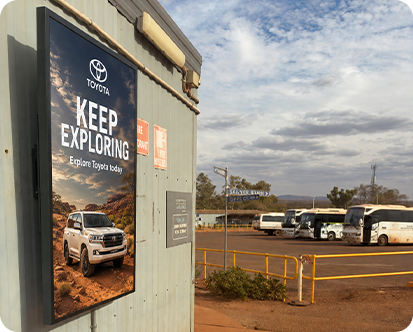
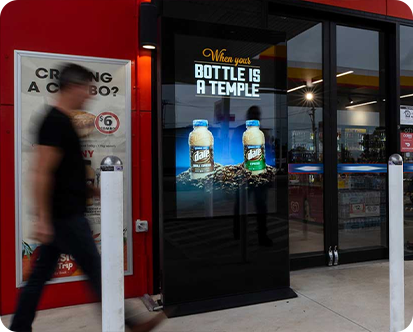
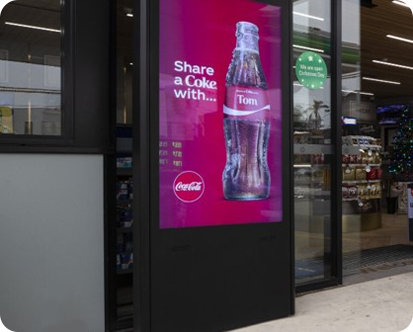
When most people think of digital out-of-home (DOOH), they think of advertising. Bright screens, brand campaigns, and consumer engagement. But in mining environments, DOOH is taking on a far more critical role.
Across remote and high-risk sites, digital signage is rapidly evolving from a marketing tool into essential operational infrastructure. It is being used to improve safety, streamline communication, and support real-time decision-making in environments where clarity and speed are non-negotiable.
For mining operators, this shift represents a major opportunity to modernise how information is delivered across site.
The Communication Challenge in Mining Environments
Mining sites are among the most complex and challenging workplaces in the world. They are:
- Geographically isolated
- Operationally intensive
- Highly regulated
- Constantly changing
Workers are often spread across large areas, operating heavy machinery, and working in shifts. Traditional communication methods such as printed signage, radio updates, or manual briefings can struggle to keep up with the pace and scale of operations.
The result is often delayed information, inconsistent messaging, and increased risk.
This is where DOOH is stepping in, not as an advertising channel, but as a real-time communication platform.
From Static Signage to Real-Time Messaging
Static signs have long been used across mining sites for safety instructions and operational guidance. But they have clear limitations:
- They cannot be updated quickly
- They become outdated
- They rely on workers noticing and remembering information
Digital signage changes this completely.
With DOOH, mining operators can deliver:
- Live safety alerts
- Shift updates and scheduling changes
- Equipment status notifications
- Weather warnings and environmental updates
All in real time, across multiple locations.
This ensures that critical information is not only available, but visible, timely, and consistent across the entire site.
Improving Safety Outcomes
Safety is the number one priority in mining, and this is where DOOH is having the biggest impact.
Digital screens can be used to:
- Broadcast immediate hazard alerts
- Reinforce safety protocols throughout the day
- Display live metrics such as incident-free hours
- Provide emergency instructions when needed
Unlike static signage, DOOH can adapt instantly to changing conditions. For example:
- A sudden weather event can trigger site-wide alerts
- A machinery issue can prompt warnings in specific zones
- Emergency messaging can override all other content
This ability to respond in real time helps reduce risk and ensures workers have the information they need, when they need it.
Enhancing Workforce Engagement
Mining workforces are often large, diverse, and operating on rotating shifts. Keeping everyone aligned is a constant challenge.
DOOH provides a centralised way to communicate with the entire workforce, regardless of location or shift timing.
It can be used to share:
- Daily briefings and key updates
- Operational targets and performance metrics
- Training reminders and compliance messaging
- Company announcements and recognition
This not only improves communication, but also helps build a stronger sense of connection and awareness across the site.
When workers are informed and engaged, they are more likely to operate safely and efficiently.
Built for Harsh Conditions
One of the key reasons DOOH is gaining traction in mining is that the technology itself has evolved.
Modern digital signage solutions are designed specifically for harsh environments, with features such as:
- High brightness for outdoor visibility
- Dust and water resistance
- Temperature tolerance for extreme heat and cold
- Rugged enclosures to withstand vibration and impact
This makes them reliable in conditions where standard commercial screens would fail.
Combined with remote monitoring and management, operators can ensure screens remain operational without the need for constant on-site maintenance.
Integration with Site Systems
The real power of DOOH in mining comes from integration.
Digital signage can be connected to:
- IoT sensors
- Fleet and equipment management systems
- Weather and environmental data feeds
- Safety and compliance platforms
This allows content to be automated and triggered by real-world conditions.
For example:
- A sensor detecting unsafe air quality can trigger immediate alerts
- Equipment downtime can be displayed across relevant areas
- Shift changes can automatically update across all screens
This turns DOOH into a live information network, rather than a static display system.
Beyond Operations: New Opportunities for Messaging
While safety and operations are the primary focus, DOOH also opens up additional opportunities within mining environments.
These include:
- Internal campaigns promoting wellbeing and mental health
- Partner or supplier messaging
- Recruitment and employer branding
In remote locations where traditional media channels are limited, DOOH becomes a valuable platform for reaching a highly specific audience.
The Future of DOOH in Mining
As mining operations continue to digitise, the role of DOOH will only expand.
We can expect to see:
- Greater automation and AI-driven messaging
- Deeper integration with operational systems
- Increased use of data to optimise communication
- Expansion of networks across entire sites and regions
Ultimately, DOOH will become a standard part of the digital infrastructure that supports modern mining operations.
Final Thoughts
In mining, communication is not just about efficiency. It is about safety, compliance, and operational performance.
DOOH is proving to be a powerful solution to these challenges, transforming how information is delivered in some of the most demanding environments in the world.
What was once seen as an advertising tool is now becoming mission-critical infrastructure.
For mining operators looking to improve safety, streamline communication, and future-proof their sites, the question is no longer whether to adopt DOOH, but how quickly it can be implemented.