

From Fuel Stop to Retail Media Network: How Petrol Stations Are Becoming the Next Big Ad Channel
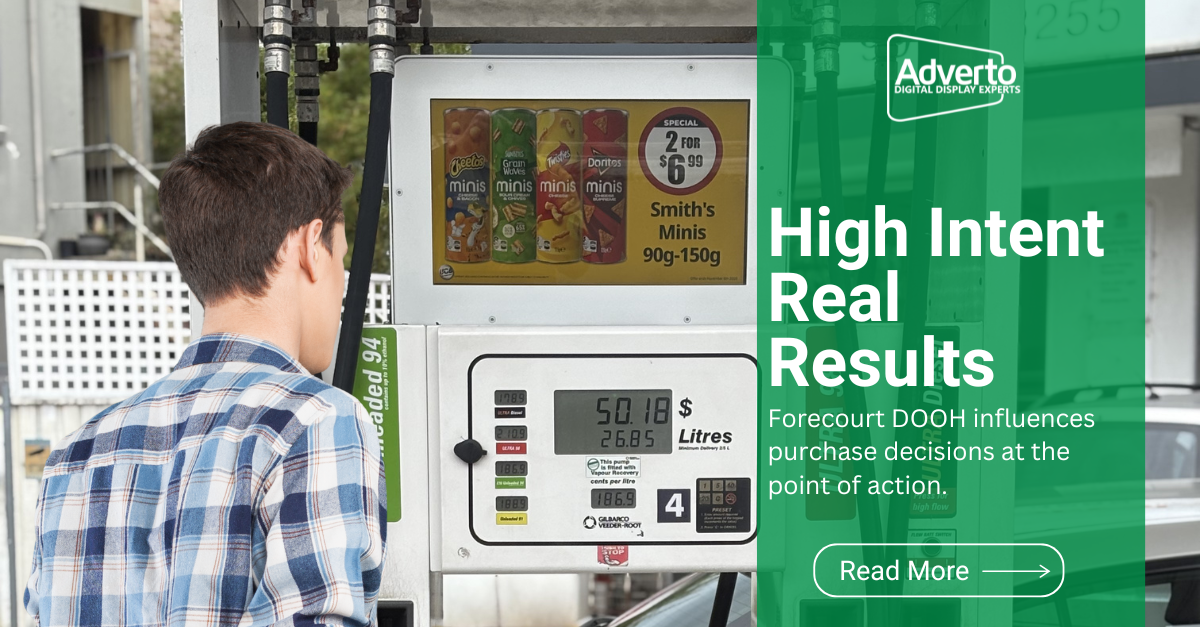
For decades, petrol stations have been viewed as purely functional spaces. Drivers pull in, refuel, maybe grab a coffee, and leave. But that perception is rapidly changing. Today, petrol forecourts are evolving into high-value retail media environments, offering brands a powerful new way to reach consumers at the exact moment decisions are being made.
As digital out-of-home (DOOH) technology advances and consumer behaviour shifts, petrol stations are emerging as one of the most effective and underutilised advertising channels in the market.
The Rise of Retail Media and Where Forecourts Fit
Retail media has become one of the fastest growing segments in advertising. Supermarkets and eCommerce platforms have led the charge by monetising their physical and digital shelf space. Now, petrol stations are following suit.
Why? Because they offer something incredibly valuable. High dwell time combined with purchase intent.
Unlike roadside billboards that rely on fleeting impressions, petrol stations create a captive audience. Drivers are stationary, often for several minutes, with limited distractions. This creates the perfect environment for messaging that is not only seen, but absorbed and acted upon.
Forecourts are no longer just a stop along the journey. They are becoming a last-mile influence point, where brands can shape decisions moments before purchase.
A High-Intent Audience in a Controlled Environment
One of the biggest advantages of petrol station DOOH is the quality of the audience. These are not passive viewers. They are active consumers.
Consider the typical forecourt scenario:
- A driver is already in a purchasing mindset
- They are likely to enter the convenience store
- They are open to impulse decisions such as food, drinks, or promotions
This creates a unique opportunity for advertisers to move beyond awareness and drive real conversion.
For example:
- A coffee brand promoting a morning deal can influence immediate purchase
- A beverage campaign can drive in-store upsell
- A retail brand can push a time-sensitive offer that converts within minutes
This is what sets petrol station DOOH apart. It bridges the gap between media exposure and transaction.
From Screens to Smart Media Networks
The real transformation is not just the presence of screens. It is the shift toward intelligent, connected media networks.
Modern forecourt DOOH is powered by:
- Real-time data feeds
- Programmatic buying
- Audience targeting based on location and time
- Integration with mobile and digital campaigns
This means campaigns can be dynamic and responsive.
A single screen can display different messaging depending on:
- Time of day
- Weather conditions
- Traffic patterns
- Local events
For example, a campaign could automatically switch from breakfast messaging in the morning to energy drinks in the afternoon, then to dinner promotions in the evening.
This level of flexibility turns petrol stations into adaptive media channels, not static placements.
The Last-Mile Advantage
In marketing, the final moment before a purchase is often the most influential. Petrol stations sit right in that window.
This is especially powerful for:
- FMCG brands
- Quick service restaurants
- Convenience products
- Automotive and travel-related services
Unlike online ads that compete for attention, forecourt DOOH delivers messaging in a focused, uncluttered environment. The consumer is already there. The decision is imminent.
This is why many brands are starting to treat petrol stations as part of their retail media strategy, not just their out-of-home spend.
Measurability and Attribution Are Catching Up
One of the traditional challenges with out-of-home advertising has been measurement. That is changing quickly.
With DOOH at petrol stations, advertisers can now:
- Track campaign performance using mobile data signals
- Measure uplift in store visits or purchases
- Integrate campaigns with digital channels for full-funnel attribution
For example, a campaign can:
- Deliver a message on a forecourt screen
- Retarget the same user on mobile
- Track whether they visit a store or redeem an offer
This creates a much clearer picture of ROI, bringing DOOH closer to the accountability of digital advertising.
Why Advertisers Are Shifting Budget
As privacy changes reduce the effectiveness of traditional online targeting, brands are looking for privacy-safe, high-impact alternatives.
Petrol station DOOH offers:
- Contextual relevance without relying on personal data
- Guaranteed visibility in real-world environments
- Strong alignment with purchase behaviour
At the same time, the rise of programmatic DOOH makes it easier than ever to buy and optimise campaigns across multiple locations.
This combination of scale, targeting, and measurability is driving increased investment into the channel.
What This Means for the Future
The evolution of petrol stations into retail media networks is only just beginning.
Looking ahead, we can expect:
- Deeper integration with loyalty programs and payment systems
- More personalised and contextual messaging
- Expansion of screen networks across urban and regional locations
- Stronger alignment between brands, retailers, and media owners
For advertisers, this represents a major opportunity. Those who move early can secure premium placements, test innovative formats, and build a competitive edge in a space that is still developing.
Final Thoughts
Petrol stations are no longer just a place to refuel. They are becoming strategic media environments where attention, context, and intent converge.
For brands looking to drive real-world outcomes, not just impressions, forecourt DOOH offers something unique. It reaches consumers at the right moment, in the right mindset, with messaging that can influence immediate action.
As the line between advertising and retail continues to blur, petrol stations are positioning themselves as the next major player in the retail media landscape.