

Real-Time, Contextual Advertising at the Pump: The Power of Data-Driven DOOH
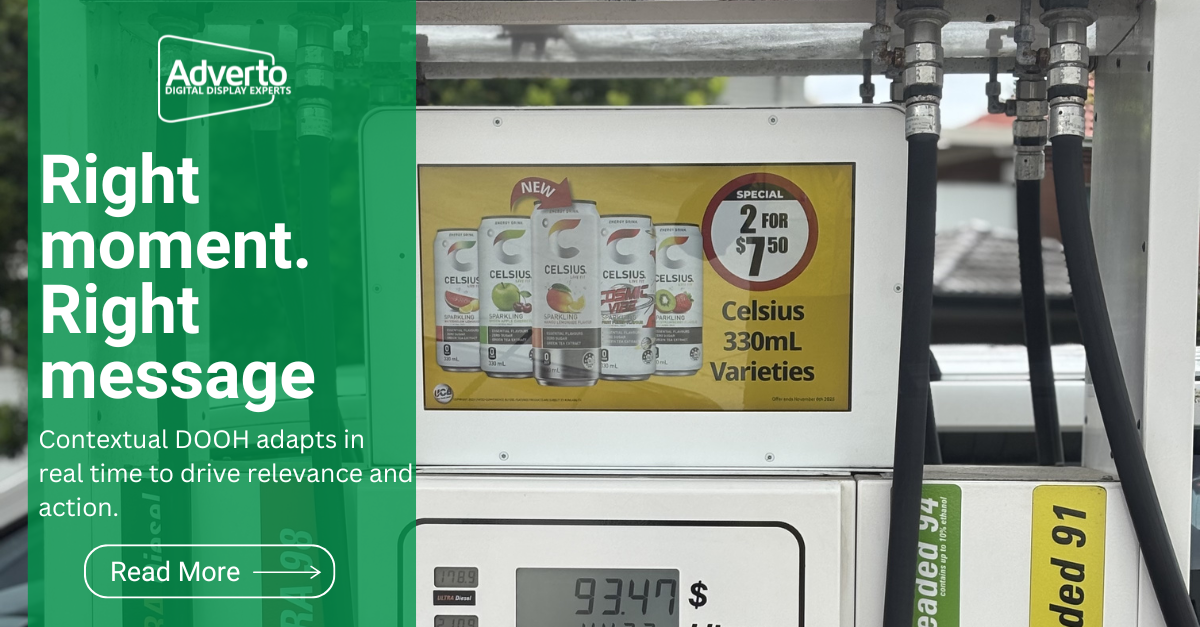
Petrol stations have always been high-traffic environments, but today they are becoming something far more valuable. With the rise of digital out-of-home (DOOH) and programmatic technology, forecourts are transforming into data-driven advertising ecosystems where messages can adapt in real time.
This shift is redefining what outdoor advertising can achieve. Instead of static campaigns delivered to broad audiences, brands can now deliver highly relevant, context-aware messaging at the exact moment it matters most.
For advertisers, this means moving beyond visibility and into true influence.
The Shift from Static to Smart Advertising
Traditional out-of-home advertising has long relied on fixed creative. A billboard goes up, a message runs for weeks, and every passerby sees the same content regardless of context.
DOOH changes that completely.
At petrol stations, screens are now connected to data sources that allow content to update dynamically. This means ads are no longer fixed. They are responsive, flexible, and intelligent.
Campaigns can be tailored in real time based on:
- Time of day
- Weather conditions
- Location-specific insights
- Traffic patterns
- Consumer behaviour trends
This transforms petrol station advertising from a passive medium into an active, decision-driven channel.
Why Context Matters at the Forecourt
The petrol station environment is uniquely suited to contextual advertising.
Drivers are:
- Stationary for several minutes
- Already in a transactional mindset
- Often planning their next immediate action
This creates a powerful opportunity for brands to deliver messages that align with the consumer’s current situation.
For example:
- A cold morning can trigger coffee promotions
- A hot afternoon can activate cold beverage campaigns
- A long weekend can prompt travel-related messaging
- Peak traffic periods can highlight convenience offers
Because the message matches the moment, it becomes more relevant, more engaging, and more likely to drive action.
Real-Time Triggers That Drive Performance
One of the most exciting developments in petrol station DOOH is the use of real-time triggers.
These triggers allow campaigns to automatically adapt based on live data inputs.
Some practical examples include:
Time-Based Triggers
Breakfast deals in the morning, lunch offers midday, and dinner promotions in the evening.
Weather-Based Triggers
Hot weather activating iced drink campaigns or rainy conditions promoting comfort food and coffee.
Fuel Price Cycles
Messaging aligned with price fluctuations, encouraging in-store purchases when fuel margins are tight.
Traffic and Travel Patterns
Targeting drivers during peak commuting hours or holiday travel periods.
These triggers ensure that advertising is not just seen, but contextually aligned with consumer needs in that moment.
Programmatic DOOH and Smarter Campaign Buying
Behind this shift is the rapid growth of programmatic DOOH.
Programmatic technology allows advertisers to:
- Buy screen space in real time
- Optimise campaigns based on performance
- Adjust messaging dynamically across multiple locations
This makes petrol station networks more accessible and scalable for advertisers of all sizes.
Instead of committing to long-term static placements, brands can:
- Test different messages
- Optimise based on engagement
- Allocate budget more efficiently
The result is a more agile and data-driven approach to outdoor advertising.
Bridging the Gap Between Physical and Digital
One of the most powerful aspects of data-driven DOOH is its ability to connect with digital channels.
Petrol station campaigns can now be part of a broader, integrated strategy that includes:
- Mobile retargeting
- QR code engagement
- Location-based messaging
- Omnichannel campaign tracking
For example, a driver exposed to a forecourt ad can later receive a related message on their mobile device, reinforcing the campaign and increasing the likelihood of conversion.
This creates a seamless journey between the physical and digital worlds, something traditional out-of-home has struggled to achieve.
Privacy-Safe Targeting in a Changing Landscape
As privacy regulations evolve and third-party cookies decline, advertisers are rethinking how they reach audiences.
DOOH offers a strong alternative.
Instead of relying on personal data, petrol station advertising uses contextual and location-based signals to deliver relevant messaging. This approach is:
- Privacy-compliant
- Scalable
- Effective without intrusive tracking
By focusing on environment and intent rather than individual identity, brands can still achieve high relevance while maintaining consumer trust.
Measuring Impact and ROI
Another major advancement in petrol station DOOH is improved measurement.
Advertisers can now gain insights into:
- Audience exposure
- Campaign performance by location and time
- Uplift in store visits or sales
- Cross-channel engagement
By combining DOOH data with mobile and retail insights, brands can build a clearer picture of how campaigns influence behaviour.
This level of accountability is helping shift DOOH from a brand awareness tool to a performance-driven channel.
What This Means for Advertisers
The move toward real-time, contextual DOOH is not just a technological upgrade. It is a strategic shift.
Advertisers who embrace this approach can:
- Deliver more relevant and timely messaging
- Increase engagement and recall
- Drive immediate action at the point of purchase
- Optimise campaigns continuously for better results
Petrol stations, once seen as secondary advertising locations, are now becoming high-impact, data-enabled media environments.
Final Thoughts
The future of petrol station advertising is dynamic, responsive, and driven by data.
Real-time, contextual DOOH allows brands to connect with consumers in a way that feels natural and relevant. It moves beyond static messaging and creates campaigns that adapt to the moment.
In an increasingly competitive landscape, this ability to deliver the right message at the right time is what sets leading brands apart.
At the pump, where attention is high and decisions are immediate, data-driven DOOH is proving to be one of the most powerful tools in modern advertising.