

DOOH in Harsh Environments: Designing Digital Signage That Survives Mining Conditions
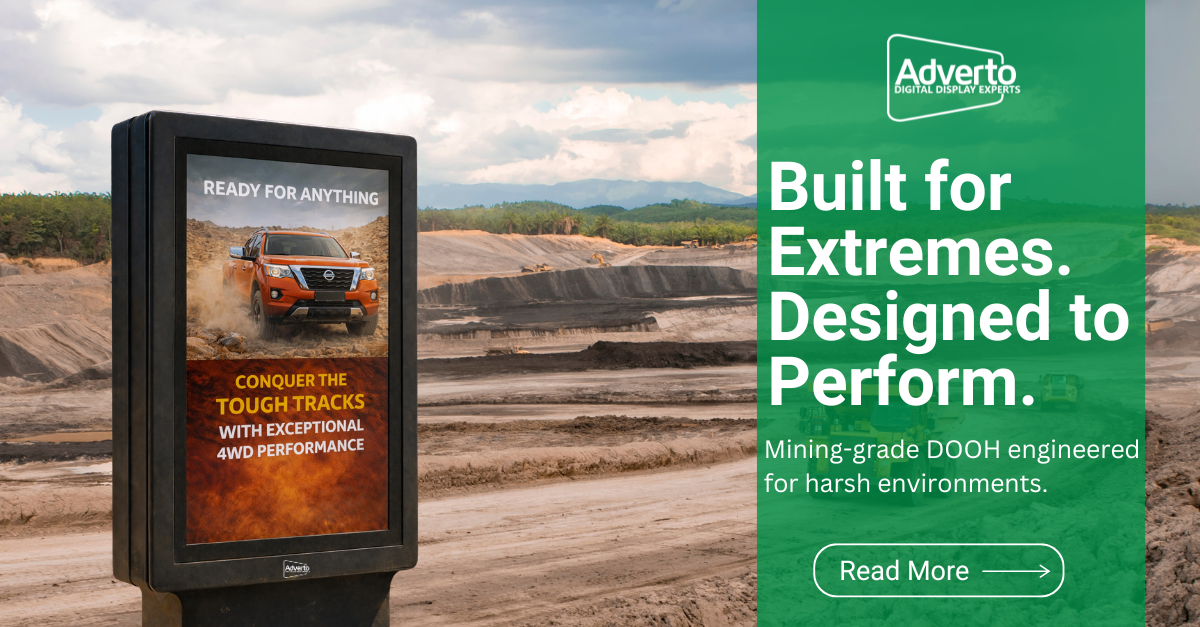
Digital out-of-home (DOOH) is rapidly gaining traction across mining environments, not just as a communication tool, but as a critical part of site infrastructure. However, deploying digital signage in mining is not as simple as installing a screen and pressing play.
Unlike urban or retail environments, mining sites present some of the harshest operating conditions imaginable. Extreme heat, dust, vibration, and remote locations all place significant demands on technology. As a result, not all digital signage is created equal.
For mining operators, success with DOOH comes down to one key factor. Designing and deploying hardware that is built specifically to survive and perform in these conditions.
Why Standard Screens Fail in Mining
Consumer-grade and even many commercial-grade displays are designed for controlled indoor environments. When placed in a mining context, they quickly encounter problems such as:
- Overheating in high temperatures
- Dust ingress damaging internal components
- Reduced visibility in bright outdoor light
- Screen failure due to vibration or impact
These failures are not just inconvenient. They can disrupt communication, increase maintenance costs, and in some cases, compromise safety.
This is why mining DOOH requires a completely different approach. It is not about adapting standard screens. It is about deploying purpose-built solutions engineered for resilience.
The Core Challenges of Mining Environments
To understand what makes effective mining DOOH, it is important to consider the conditions it must operate in.
- Extreme Temperatures
Mining sites often experience high heat during the day and significant temperature drops at night. Screens must operate reliably across a wide temperature range without performance degradation. - Dust and Particulates
Dust is one of the biggest challenges. Fine particles can infiltrate hardware, clog cooling systems, and damage internal components over time. - High Brightness Conditions
Outdoor mining environments are exposed to direct sunlight. Screens need to maintain clarity and readability even in intense glare. - Vibration and Physical Impact
Heavy machinery, blasting, and constant movement create vibration that can affect hardware stability and lifespan. - Remote Locations
Many sites are located far from service centres, making maintenance and repairs more difficult and costly.
These conditions demand technology that is not only durable, but also low maintenance and highly reliable.
What Makes Mining-Grade DOOH Different
To perform in these environments, mining-grade digital signage incorporates several critical design features.
Rugged Enclosures
Screens are housed in protective casings designed to withstand dust, moisture, and physical impact. High ingress protection ratings ensure internal components remain sealed and protected.
Advanced Thermal Management
Cooling systems are engineered to handle extreme temperatures, preventing overheating without relying on fragile components.
High-Brightness Displays
Outdoor screens often exceed standard brightness levels, ensuring content remains visible even in direct sunlight.
Anti-Glare and Protective Glass
Specialised coatings and reinforced glass improve visibility and protect against scratches and damage.
Vibration Resistance
Mounting systems and internal components are designed to absorb and withstand constant vibration.
Together, these features ensure that screens are not just functional, but dependable in environments where failure is not an option.
Reliability Is More Than Hardware
While hardware design is critical, reliability in mining DOOH goes beyond the physical screen.
Remote Monitoring and Management
Operators need visibility over their network at all times. Remote management systems allow teams to:
- Monitor screen performance
- Push content updates instantly
- Diagnose issues without being on-site
This reduces downtime and eliminates the need for frequent manual intervention.
Content Failover Systems
In the event of connectivity issues, systems can be designed to continue displaying critical information, ensuring communication is never interrupted.
Energy Efficiency
Power availability can be limited in remote areas. Efficient systems help reduce operational strain while maintaining performance.
Designing for Visibility and Clarity
In mining environments, visibility is not just about brightness. It is about ensuring information can be understood quickly and clearly.
Effective DOOH design considers:
- Large, legible text for quick readability
- High contrast colour schemes
- Simple messaging that can be understood at a glance
- Placement in high-traffic, high-visibility areas
Workers often have limited time to absorb information, so clarity is essential.
The Cost of Getting It Wrong
Choosing the wrong DOOH solution can lead to significant long-term costs.
Frequent hardware failures result in:
- Increased maintenance and replacement expenses
- Operational disruptions
- Reduced trust in the system
- Potential safety risks if critical messages are not delivered
In contrast, investing in the right infrastructure from the start ensures:
- Consistent performance
- Lower total cost of ownership
- Reliable communication across the site
In mining, durability is not a luxury. It is a necessity.
DOOH as Long-Term Infrastructure
As mining operations continue to digitise, DOOH is becoming a permanent part of site infrastructure.
It is no longer viewed as an optional add-on. Instead, it plays a role alongside:
- Operational systems
- Safety platforms
- Communication networks
This shift means decisions around DOOH need to be made with a long-term perspective.
The focus should not be on the lowest upfront cost, but on performance, reliability, and scalability over time.
Final Thoughts
Deploying DOOH in mining environments requires more than just installing screens. It demands a deep understanding of the conditions, challenges, and operational requirements of each site.
From rugged hardware to intelligent system design, every element must be built to withstand the realities of mining.
When done right, DOOH becomes far more than a display. It becomes a reliable, always-on communication tool that supports safety, efficiency, and operational performance.
In environments where conditions are unforgiving and margins for error are small, the right technology makes all the difference.